

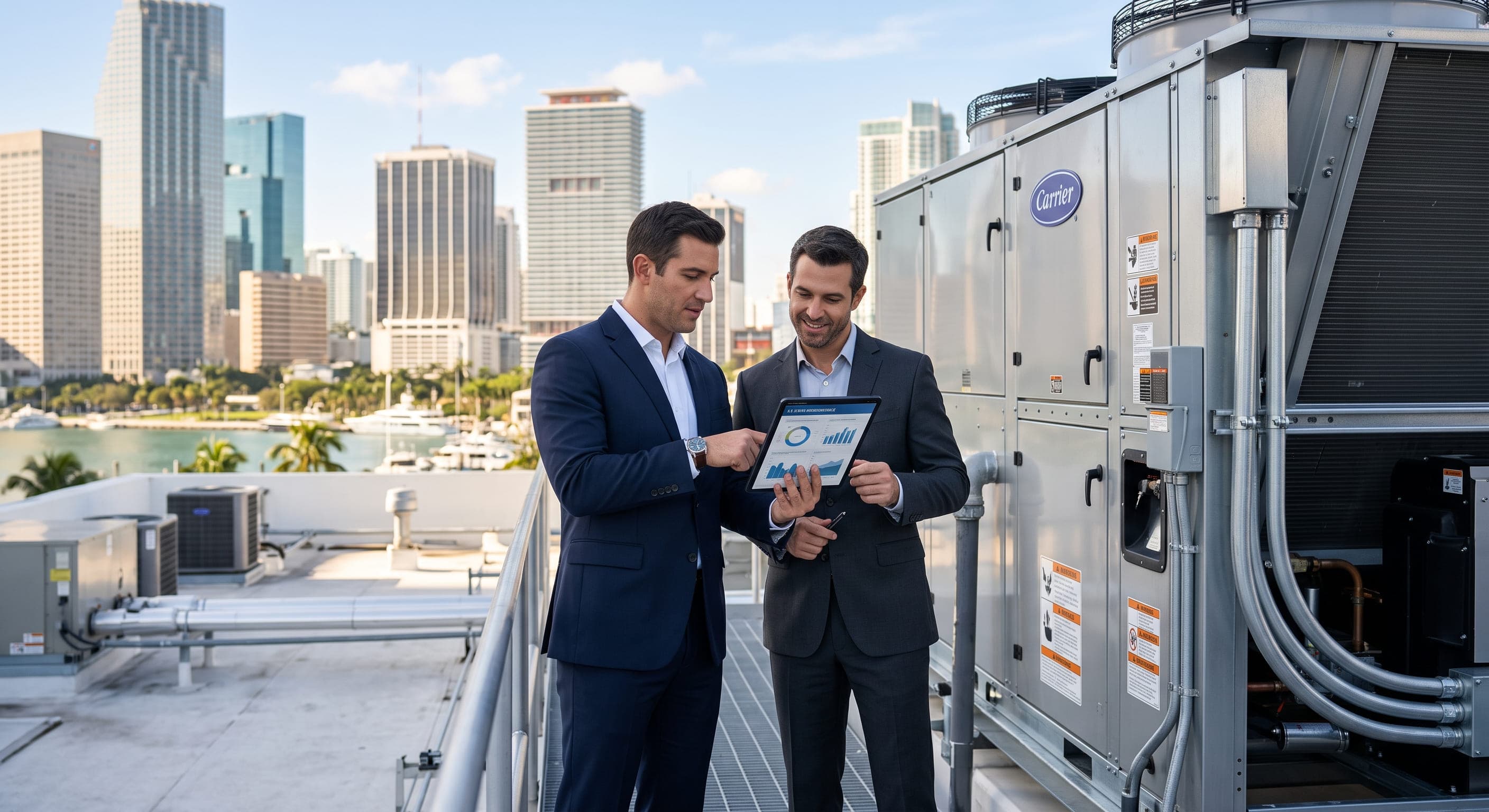
An HVAC acquisition should match the buyer's experience, available capital, financing capacity, preferred geography and operational plan. We help qualified buyers define their criteria, review appropriate opportunities and follow a structured transaction process.
Buyer Qualification
Before receiving confidential company information or speaking with a seller, prospective buyers may be required to sign a nondisclosure agreement and provide proof of funds, a lender letter or other evidence of financial capacity. These requirements protect the seller and reduce unnecessary disclosure.
What Buyers Should Examine
- Quality and consistency of reported earnings
- Maintenance agreements and recurring revenue
- Customer concentration and commercial-contract terms
- Technician retention and compensation
- Owner responsibilities and transition requirements
- Licensing and qualifying-agent continuity
- Fleet, equipment and expected capital expenditures
- Seasonality, service territory and marketing sources
- Lease, real estate and facility requirements
- Working capital, inventory and transaction structure
Standard Transaction Process
Define acquisition criteria and financial capacity.
Complete confidentiality and qualification requirements.
Review the confidential information memorandum.
Submit an appropriate purchase contract and escrow deposit.
Complete the agreed due-diligence review.
Resolve financing, licensing, landlord and closing conditions.
Complete closing and the agreed transition.
Communication With Employees and Customers
Prospective buyers may not contact employees, customers, vendors or other parties connected with a confidential listing unless the seller gives written approval and the transaction process permits the communication.
Buying Unrepresented vs. With HVAC Exit Advisors
| Process Step | Unrepresented Buyer | With HVAC Exit Advisors |
|---|---|---|
| Financial Verification | Must audit unadjusted tax returns manually | We pre-vet SDE (Seller's Discretionary Earnings) and add-backs |
| Deal Origination | Public listings heavily picked over by competitors | Access to exclusive, off-market Florida HVAC listings |
| Financing Support | Navigate SBA lenders independently | Direct introductions to HVAC-friendly SBA preferred lenders |
Why Buyers Work With HVAC Exit Advisors
Learn More Before You Buy
Common Questions When Buying an HVAC Business
What is the $5000 rule for HVAC systems?
The $5,000 rule is a common rule of thumb used by homeowners and contractors to decide whether to repair or replace an HVAC system. You multiply the age of the equipment by the estimated repair cost; if the result exceeds $5,000, the unit should be replaced. For buyers acquiring an HVAC business, understanding this rule helps evaluate the company's service-to-replacement conversion rate and future equipment sales potential.
What type of business is an HVAC business?
An HVAC (Heating, Ventilation, and Air Conditioning) business is a skilled trade and mechanical services company. It operates in the construction, home services, and commercial facilities sectors. HVAC businesses are highly valued by private equity because they generate consistent, recurring revenue through preventative maintenance agreements (PMAs) and non-discretionary emergency repairs.
Can HVAC make $100,000 a year?
Yes, a well-run independent HVAC business owner can easily make well over $100,000 a year in seller's discretionary earnings (SDE). In Florida, many established owner-operated HVAC companies generate between $200,000 and $500,000+ in annual SDE, while larger, manager-run mechanical contractors can produce multi-million dollar EBITDA figures.
Why is the HVAC industry struggling?
While the HVAC industry is seeing record growth and consolidation, individual independent operators often struggle due to severe technician labor shortages, complex state licensing requirements (such as the Florida DBPR), and supply chain unpredictability. Acquiring an existing HVAC business with a stable, trained workforce allows buyers to bypass these common industry struggles.
Frequently Asked Questions About Buying
Get Matched with Listings
Tell us what you're looking for in a Florida HVAC acquisition.
Ready to Find Your Next HVAC Acquisition?
Browse vetted Florida listings or talk to a broker about what you're looking for - no pressure, no obligation.